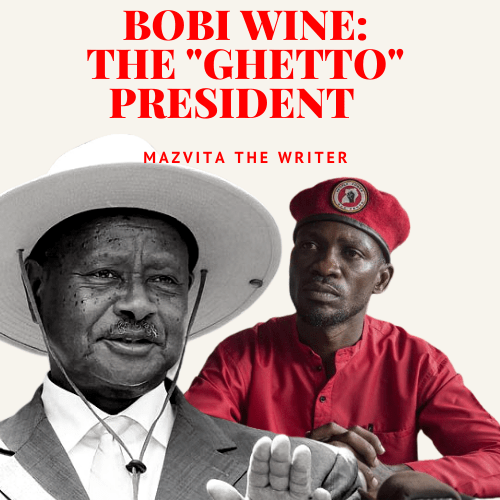
Waiting to see if Bobi Wine had ‘won’ the election that took place on the 14th of January in Uganda was like going through a familiar nightmare. The internet shut downs. The increase in military presence. Usually not a good sign for us Africans just before an election.
The tale of autocratic African leaders clutching onto power in old age, even as their health fails, has become overwhelmingly familiar. This may be why the 38-year-old former dance-hall artist, Bobi Wine, brought so much hope not only to Ugandans but to young Africans across the continent.
Finally, a “voice for the people” who was unlikely to betray them once in power.
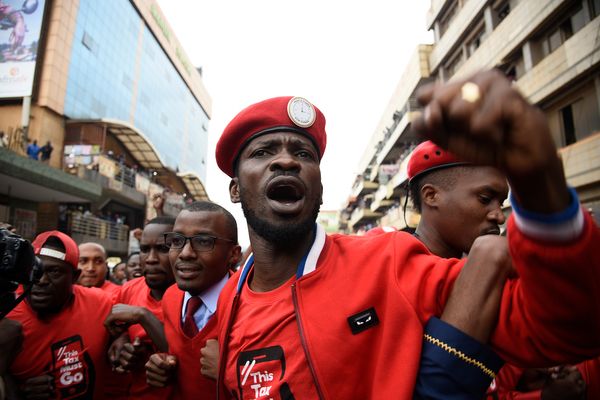
Wine, born Robert Kyagulanyi, may not have been a traditional candidate by background but he has certainly proven to be one of the bravest. Occasional threats against his life have been made in the run up to the election, with at least 37 of his supporters being killed during protests for showing their support. He has posed the biggest threat so far to Yoweri Museveni’s unending 35-year-rule.
To diasporans, especially, African politics can often be very perplexing and frustrating to make sense of. Why are African leaders holding onto power? Especially, at the expense of their citizens and (more importantly) how are they getting away with it?
A boastful fact for Africa is that 60% of it’s population is under the age of 25. This makes it the youngest continent in the world.
Bill Gates has cited this youthfulness as a sign of great “potential and opportunity”. Mainly because young people tend to be filled with more positivity and “optimism” for change. They are not as gloom-ridden as their older counterparts.
Wine is commonly referred to and known as the “ghetto” president. He was referred to as “his excellency, the ghetto president” long before he acquired political ambitions. He initially found fame and fortune in Uganda making dancehall music fused with the local “kidandali” sound. His rags to riches story and his charismatic personality made him the perfect candidate to connect with the younger voters who have only ever seen Museveni rule.
This connection to the youth is a huge threat for the ageing, previously autocratic, government.
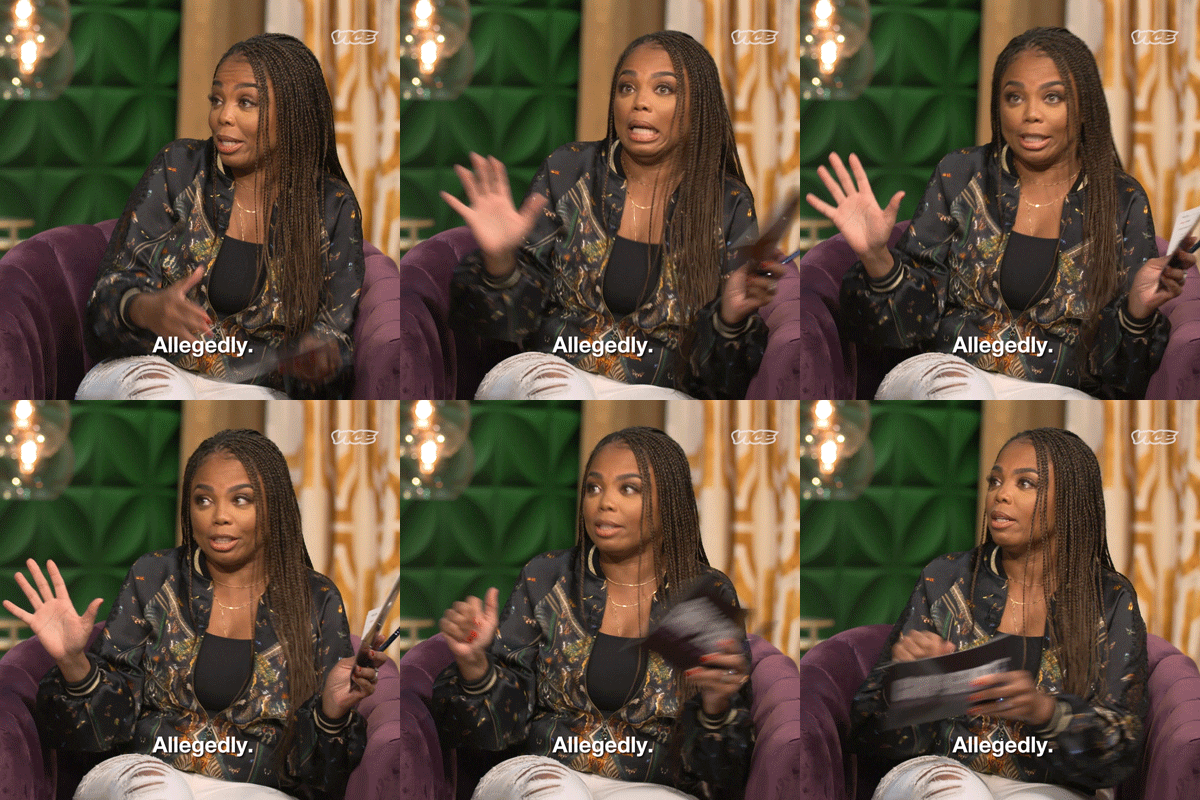
To maintain power it is ALLEGED that Museveni may have taken part in election fraud. He secured 59% of the country’s votes ALLEGEDLY, while Wine secured just over 35% ALLEGEDLY.
Election fraud is defined as any act that involves manipulation of votes, including depressing the vote share of the opposition to ensure their “loss”.
Museveni is accused of this by Bobi Wine, as well as some of the 2000 election observers who were deployed by the Africa Elections Watch Coalition. The President’s continued scare tactics towards his opposition (e.g. death threats, house arrest and murder of supporters) do not help to plead his innocence.
Another questionable government mandate is the internet shutdown that the country was placed in a day before the election took place.
We’ve seen the tactic of blocking internet access in Zimbabwe, Sudan, Togo, Burundi and many other African countries. Leaders often attribute the cause for the shutdowns to being in the interest of “maintaining national security”.
The success of internet censorship depends on how well a government is able to control their internet service providers. As government bodies are often in charge of licensing, threats to withdraw these licences mean that companies have no other choice than to comply with their governments. This is even easier for countries, such as Ethiopia, who have a single state-controlled internet system.
This is the not the first internet shutdown that Uganda has seen just before an election. In February 2016 with the internet blocked on the day of the election, Museveni said it was to stop people “telling lies”.
The shutdowns ultimaltely mean that people are not able to communicate over powerhouse social media platforms such as Instagram, Facebook and Twitter. The most popular network in Africa is WhatsApp, with many users receiving some of their news through chain messages and various group chats – like a digital version of Chinese whispers. Hence the government argument that the shutdowns are to stop people ‘lying’ or spreading fake news.
When Museveni first became president he wrote on leaders “overstaying” their turn.
“The problem of Africa in general and Uganda in particular is not the people but leaders who want to overstay in power,” he wrote in 1986.
It’s unlikely he would have anticipated being one of the leaders many people now believe has overstayed their time in power. In 2005 he removed a two-term presidential term limit to enable himself to run for a third term. In 2017, at the age of 73, Yoweri Museveni removed the presidential age limit of 75 which enabled him to stand for the most recent election.
There is a great danger that democracy for some leaders means putting on a display for the western world which it remains a beneficiary of donation and aid, whilst exposing their citizens to unfair and harsh punishments for trying to expose structural injustices and corruption.
Opposition leader, Bobi Wine, pleads with “Uganda’s development partners not to continue acting in a way that makes them appear as partners in crime with General Museveni.”
It is the international aid given to the country that the government is then able to exploit for personal security and political patronage.
Many Museveni supporters and some pan-africanists argue that questioning the length of time African leaders remain in power is racist. For example, German Chancellor Angela Merkel has held her role for just over 15 years and there is hardly (if any) backlash for that. Many accused “overstayers” were a part of liberation movements to obtain freedom from various European countries and helped to break colonial ties.
But what use is such a powerful Mandela-esque legacy if the end of that legacy is tarred by violence and stifling of democracy?
#AfricaIsBleeding #UgandaDecides #RemovingADictator

 MAZVITA